Tuesday, October 10, 2023

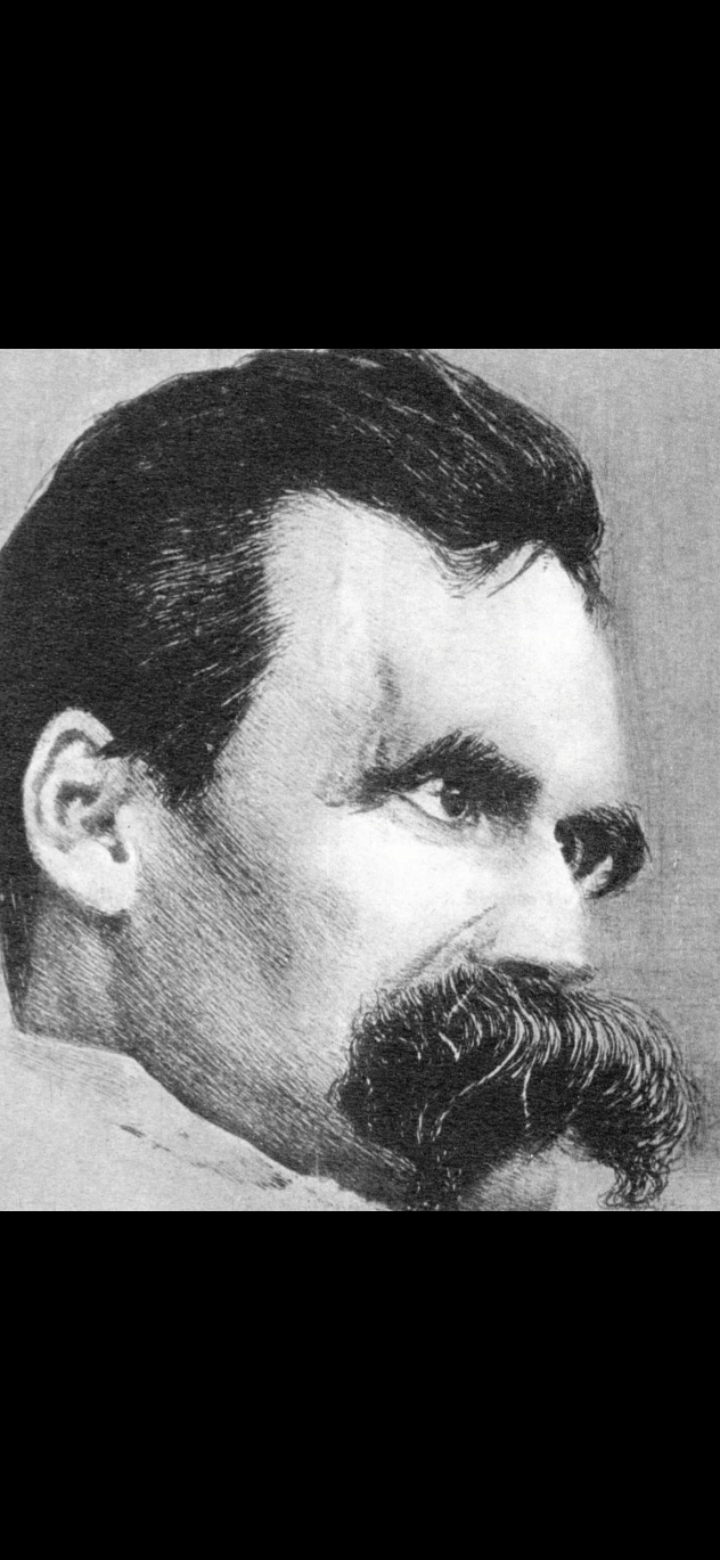
I SEE NIETZSCHE IN THE TREES


Pareidolia is the word people use when they don't understand Nietzsche is speaking to them.
The bar's wet. Maybe he's tryin' to say he's got a cold. 

Sunday, December 29, 2019

100 YEARS OF TARZAN MOVIES


          There's never been a Tarzan movie accurate to the books. One of the most recognizable characters ever created. And with more film incarnations than perhaps any other literary character with the possible exceptions of Sherlock Holmes and Frankenstein's monster. Yet for one hundred years (the book was published in 1912), none of the movies have ever gotten it right.
          The first one, Tarzan of the Apes (1919), even screws up the writer's name in the film's opening image. His name was Edgar Rice Burroughs, not Edgar Rice Burrough. (The film has the possessive apostrophe inside the "s" when it needs to be outside.)
          All other sources wrongly declare the first movie Tarzan to be Elmo Lincoln. But nope, not true. It's actually Gordon Griffith, the actor who plays Tarzan as a boy.
          According to edgarriceburroughs.com, ERB, who wrote for 39 years until his death at age 74, spawned with his imagination 60 films and 250 television episodes. That would naturally include other characters, primarily John Carter and David Innes. The site also displays a quote from the great Ray Bradbury: "Edgar Rice Burroughs was, and is, the most influential writer, bar none, of our century."
          Still, never an accurate Tarzan movie. Some, almost close. Most, nowhere near.
          That's not even including the Disney Tarzan. Which to the purist perspective is awful because they get so many things wrong. It always comes down to the big question: Why? Why change anything? Come up with your own dang story! Don't give Tarzan dreadlocks. Don't make Tarzan small. Don't make Tarzan slide around like a skatepunk. Sheeta is the name for leopards, and Sabor is the name for lionesses. Separate, not interchangeable. Jane Porter has blonde hair, and there are black people in Africa.
          But they never get it right.
          "Me Tarzan, you Jane" is never a thing written in the books or said in the films. Just as Humphrey Bogart never says, "Play it again, Sam," in Casablanca, Johnny Weissmuller never says the former misattributed quote.
          It is of course an outrageously ridiculous and racist premise that a rich white English baby wouldn't just crumple up from snakes, insects, and malaria in the first forty-eight hours. Nahh, this baby doesn't even need shoes--although if he was dancing around in Buckingham Palace he sure would.
          Tarzans Gene Pollar, P. Dempsey Tabler, and James H. Pierce (who married Burroughs' daughter Joan) are real head-scratchers. Because of each man being physically in every respect not at all one bit like Tarzan, just makes ya wonder.
          Originally Burroughs himself wanted Olympic decathlete Herman Brix (who later changed his name to Bruce Bennett) to play the Lord of the Jungle. After an injury posed a setback for Brix, MGM went with champion Olympic swimmer Johnny Weissmuller.
          Burroughs later produced his own film version of Tarzan with Bennett starring. Bennett does a great job in Tarzan and the Green Goddess (1936), looking very much the part as described in the books. But the story is inexplicably set in...Guatemala. And yet we see footage of a rhinoceros and some lions. In Guatemala.
          The same exact African animal stock footage gets used and re-used in Tarzan movies over and over, just like their rubber crocodile.
          In the '60s TV series, Ron Ely was a blonde, short-haired Tarzan for the Civil Rights era. In the '80s, Miles O'Keefe has a bit part as the ape-man in the Bo Derek vehicle, and Christopher Lambert is lithe and says, "Oo, oo."
          In the one from a few years ago Alexander Skarsgaard does a credible job, except for being blonde and wearing little pants instead of the requisite loin cloth.
          The Filmation cartoon series "Tarzan, Lord of the Jungle" compares pretty well with the movie competition, actually.
          Overall, a few of the Weissmuller movies are probably the ones most worth watching for sheer Golden Age movie charm. But even after a hundred years, it's never been properly done.


Stewart Kirby writes for
THE INDEPENDENT


Monday, December 9, 2019

"TEN COMMANDMENTS" MOVIE HEAVEN


          Starring the great Yul Brynner as Rameses, Pharaoh of Egypt, and also starring Charlton Heston as the Hebrew slave, Moses, Cecil B. DeMille's The Ten Commandments (1956) plays like pure movie paradise.
          Featuring an all-star cast plucked from the cinematic firmament: Edward G. Robinson, Anne Baxter, Cedric Hardwicke, Vincent Price, John Derek, Yvonne De Carlo, John Carradine, and many more.
          From the man who got Bible movies down to a science, The Ten Commandments is Cecil B. DeMille's story of Moses, religiously played by a gentile. Set in the days when slaves were all just clean, decent white folks and Pharaoh was a stern but kindly old British guy, the music is so huge, the narration so epic, the majesty of DeMille's creation really raked in the moolah.
          Some of DeMille's shots, particularly those depicting long lines of human toil, call to mind the work of Soviet Union filmmaking genius Sergei Eisenstein's masterpiece Ivan the Terrible, they're that good. Most of the movie, however, is overshadowed by hyper-use of color.
          He'd made the film before. DeMille's first version was the black and white silent relic from 1923. So he dug that one up and gussied it with the sparkling technology of the day.
          It wasn't his only collaboration with Heston. He also cast Heston as the ringmaster in a circus.
          Utilizing miracles of movie trickery, 24 frames per second flash and we see the Burning Bush, and get to listen in while it tells Moses what to do. We see the magic staff of Moses turn into a snake that eats other snakes without even developing a lump and having to take a month or so to digest.
          Above all, The Ten Commandments is a story of men. Men in a pants-free world.
          And it is a story of commands, laws bestowed by God Himself to never break, under any circumstances, no matter what. Laws such as, Thou Shalt Not Kill.
          The best part is when Moses lures a bunch of guys into the Red Sea that God opened up and then they all get killed. Plus there's a river that turns into blood, a creeping Death Fog, and even a Pillar of Fire. So there's plenty of something for everyone.
          Anyone watching the movie who questions why God talks to Moses only and can't appear as a governing species of flame-retardant flora for all to witness will be ritualistically flogged.
          Behold, Yvonne De Carlo before she became TV's Mrs. Munster!
          Behold, Charlton Heston and Edward G. Robinson in the same movie years before they were in Soylent Green, the one where people get turned into crackers!
          Yes, The Ten Commandments. Available online, and wherever shafts of sunlight angle down from gaps in clouds.


Stewart Kirby writes for
THE INDEPENDENT


Monday, November 11, 2019

"M*A*S*H" MEDICINAL


          You'd never know it to watch the film, but Donald Sutherland and Elliott Gould went behind the director's back and tried to get him fired because they thought he was crazy, and they didn't want this crazy man to ruin their film careers.
          The director with the supposedly questionable mental health was Robert Altman. What made the stars think the director was crazy was the totally innovative way that he filmed his outrageous, irreverent, blasphemous, hilarious anti-authoritarian masterpiece, M*A*S*H (1970).
          Writer Ring Lardner, Jr., rightly recognized the quality of the book by Richard Hooker. From his interest, and his screenplay, the project came into the hands of Altman, who then proceeded to film an improvisation of that screenplay. Which infuriated Lardner. It's this improv-style which was so original that cast members literally feared for Altman's sanity, and mostly for their careers.
          But the end result proved that Altman's method was totally right. Everyone knew their characters so well from the script that they were able to discard it and give a freer, more natural expression with no one ever knowing exactly what Altman was filming or keeping. People talk over each other. There's a general murmur of background noise. The result is a non-linear counterculture victory, a slam-dunk against blind conformity for the ages.
          The time, 1951. The place, Korea. (Set in Korea, yes, but the subtext at times was the military action taking place in Vietnam.) At the 4077th Mobile Army Surgical Hospital, two indispensable military surgeons retain their sanity, in the midst of so much opposite, with a stringent regimen of martinis, nurses, golf, bathrobes, Hawaiian shirts and poker. The surgeons are captains Hawkeye Pierce (Sutherland) and "Trapper" John McIntyre (Gould). When they're not sewing up kids sent back from the front line, they're taking apart a couple of majors who take themselves too seriously.
          Because theirs is a corrupting influence, the brilliant surgeons relentlessly ride the village idiot, Frank Burns (Duvall), who unforgivably reads aloud from the Bible right in front of decent people trying to get loaded.
          Burns' attractive yet hopelessly square fraulein friend Margaret Houlihan (Kellerman) sees beady eye-to beady eye with him at all times mid-goosestep, which is just the sort of thing to put Hawkeye right off his dinner. Bummer, too, because he otherwise would have invited her back to his tent, and she "might possibly have come."
          Twentieth Century Fox studio heads had zero idea the hit on their hands. No awareness at all. They were ready to scrap it. Until, that is, they saw the reaction from a preview audience. The audience didn't just love it, they went totally crazy for it! So then the studio scrambled to start taking credit.
          The film, which launched several acting careers and spawned into one of the best shows ever on TV, even won an Academy Award. And the Oscar went to...Ring Lardner, Jr.
          For the script they eventually didn't even use.


M*A*S*H
Starring Donald Sutherland,
Elliott Gould,
Sally Kellerman,
Robert Duvall,
Tom Skerrit,
Gary Burghoff,
Roger Bowen,
Jo Ann Pflug
Directed by Robert Altman
Written by Ring Lardner, Jr.
Based on the book by Richard Hooker
Runtime 116 minutes


Stewart Kirby writes for
THE INDEPENDENT


Monday, November 4, 2019

ORIGINAL "VILLAGE" DAMNED GOOD


                    One fine day in a rural English village, without any warning, all the animals and people suddenly collapse. The farmer in his tractor, slumped over the wheel, spins in slow wide circles till the tractor hits a tree. And even then he doesn't budge. No one does. Not even George Sanders, who had starred in a string of B-grade amateur detective flicks a generation earlier before passing the baton to his younger brother.
          After a couple hours of utter insensibility, Sanders manages to haul his genteel carcass up from the floor, rather as though he'd just been sleeping one off curled up with the dog. "What an extraordinary thing to do," he says, trying to cover up to his wife who caught him fair and square.
          Soon, however, the whole village learns that everyone there went lights out at the same time and stayed that way for a few hours. What an extraordinary thing indeed. Gradually, they also learn something further: all the women of child-bearing age have now become pregnant. Some of whom, presumably just like George Sanders' wife, have never had sex in their lives.
          All the babies gestate at an accelerated rate, each one a marvel of development. When they are born, all have blonde hair, arresting eyes, and are uniformly in possession of remarkable intelligence. Intellectual powers so vast, these kids can make people do things without ever saying a word.
          Whenever someone tries to hurt them, they know it in advance. They don't have to say a thing. Those who would try to hurt them cannot help but stop. And receive a stringent lesson in the only thing that matters to Midwich's most gifted young minds: the only thing they want is to be left alone.
          Village of the Damned (1960) is a gem of a picture with a story which may seem familiar even to those who've never seen it. Rod Serling sure did. One of the most famous episodes of The Twilight Zone, "It's a Good Life," stars Billy Mumy as a creepy kid who can read people's minds and do anything he wants.
          Serling's take focuses on the problems of an "overly permissive" society allowing children to run rampant. But the original film from which he was so permissively allowed to directly lift comes from a different place entirely. The director, Wolf Rilla, was born in Berlin. When Adolf Hitler was suckering Germany, Rilla's father, who was Jewish, moved the family to England. So the real problem in the story isn't young people on the brink of peace, love, and rock n' roll. The real problem is blonde inhuman aliens who think that they're superior.
          Re-made not as well in 1995 by John Carpenter, and re-made even more not as well as a television series in 2017, Village of the Damned inexorably demands to be seen, heard, and obeyed.


VILLAGE OF THE DAMNED
Starring George Sanders,
Barbara Shelley,
Michael Gwynn,
Laurence Naismith,
Martin Stephens
Directed by Wolf Rilla
Written by Stirling Silliphant, Wolf Rilla, Ronald Kinnoch
Based on the novel by John Wyndham


Stewart Kirby writes for
THE INDEPENDENT